Clutch Spline Failure Analysis
Posted: Mon Mar 17, 2008 6:25 pm
We have gone full circle on the clutch spline failure and the following documents the research, pictures, measurements, related incidents and conclusions.
The topic is essentially a root cause failure analysis and I’ll try to be careful with the explanation and language so as not to confuse the readers. So off we go:
Background
The BMWR259 models (4 valve heads) are no strangers to clutch failures as they have been documented on the various forums representing the brand time and time again. The failures are not model specific as they affect the R, RS, RT and GS, albeit I haven’t found many GS’s the have been affected.
On the R1150R forum the topic has come up several times dating back to December 24th, 2005 describing specific instances and September 12, 2007 among others, documenting specific failures across model lines.
One of the most interesting aspects, to date, is that the quantity of failures is significant enough and potentially dangerous to have warranted acknowledgement and action by the OEM but this has yet to happen. Some owners have been lucky and their repairs were warranted, some others had to endure partial or full cost for the repair along with the lay-up time.
Data
I was provided with actual samples of failed parts kindly donated by RiftonRoadster, along with pictures from tor1150r parts, for inspection, evaluation and measurement.
Rifton parts – 02 R1150R @ 43K miles
Input shaft had no visible/measurable wear other than the splines, the bearing was tight and free. Clutch disc measured 0.248’ (thickness) between the friction faces, as new thickness is ~0.350’ or ~ 9 mm, complete wear, to the rivets, is 0.175’ or 4.5 mm. Based on these measurements and the specific operating habits of the owner. I would have predicted a clutch life of 60K miles with a safety factor of 0.5 mm before rivet to flywheel contact.
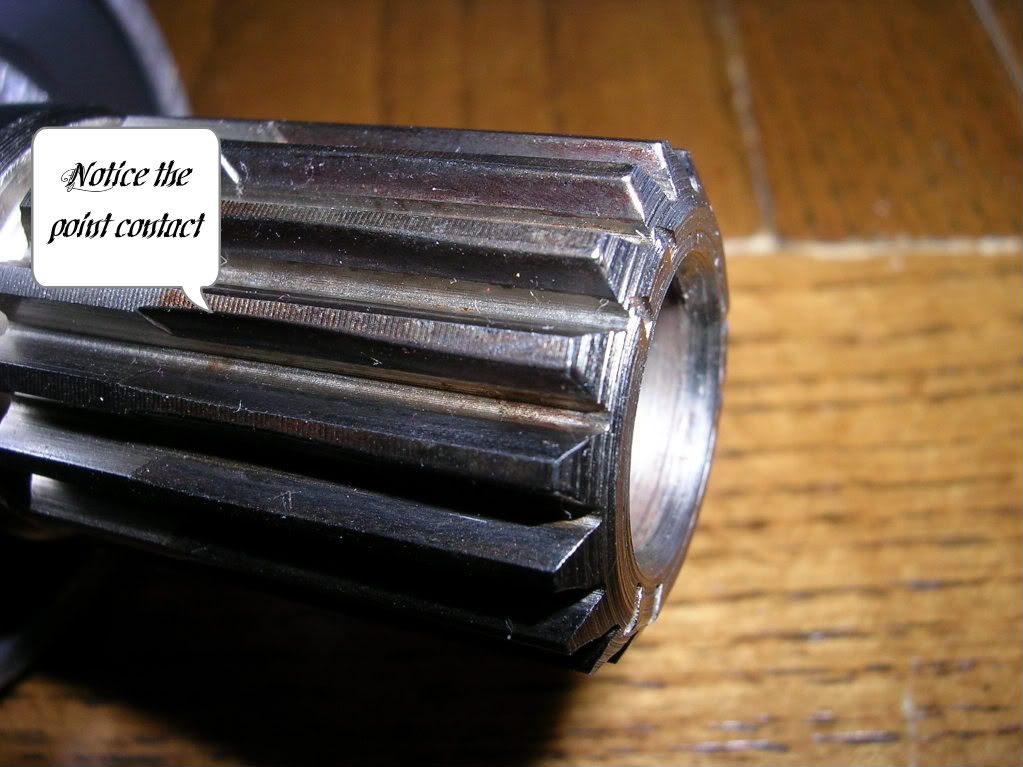
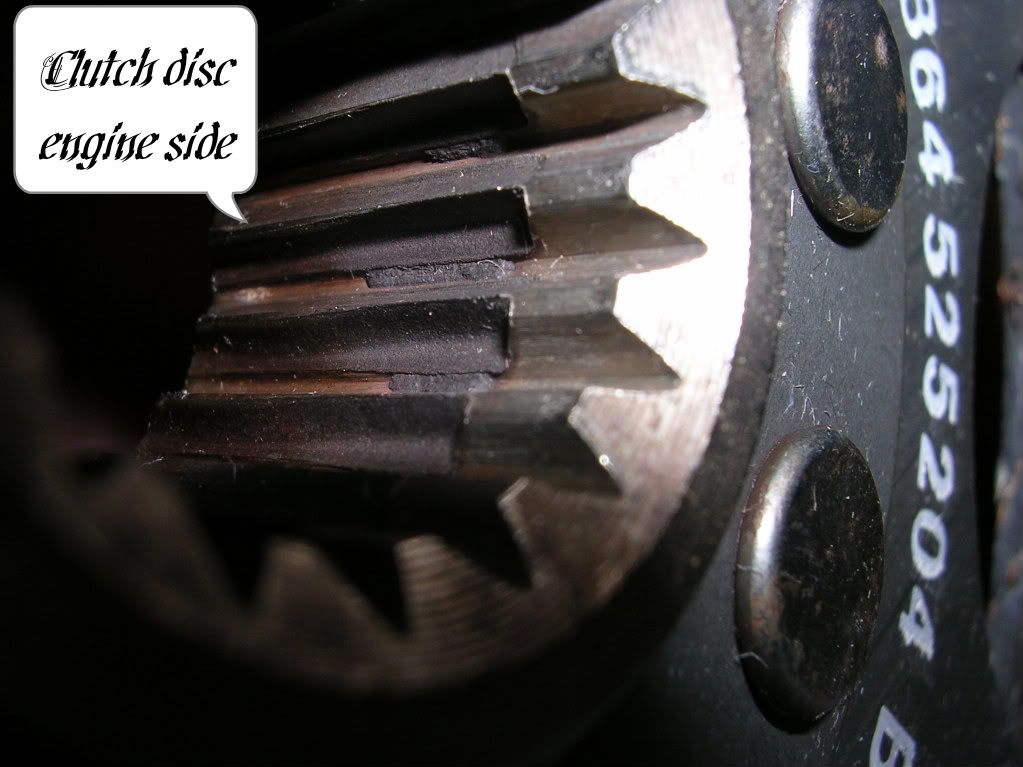
The input shaft displays significant spline wear starting at the transmission end and tapering off towards the front of the input shaft. This wear, in the vernacular, is the pre-cursor to the failure. The wear is uniform around the OD of the input shaft indicating the presence of angular misalignment between these two elements. Normal lubrication can’t cope with this phenomena and is therefore “squeezed†out by the heavy contact and accelerating the failure.
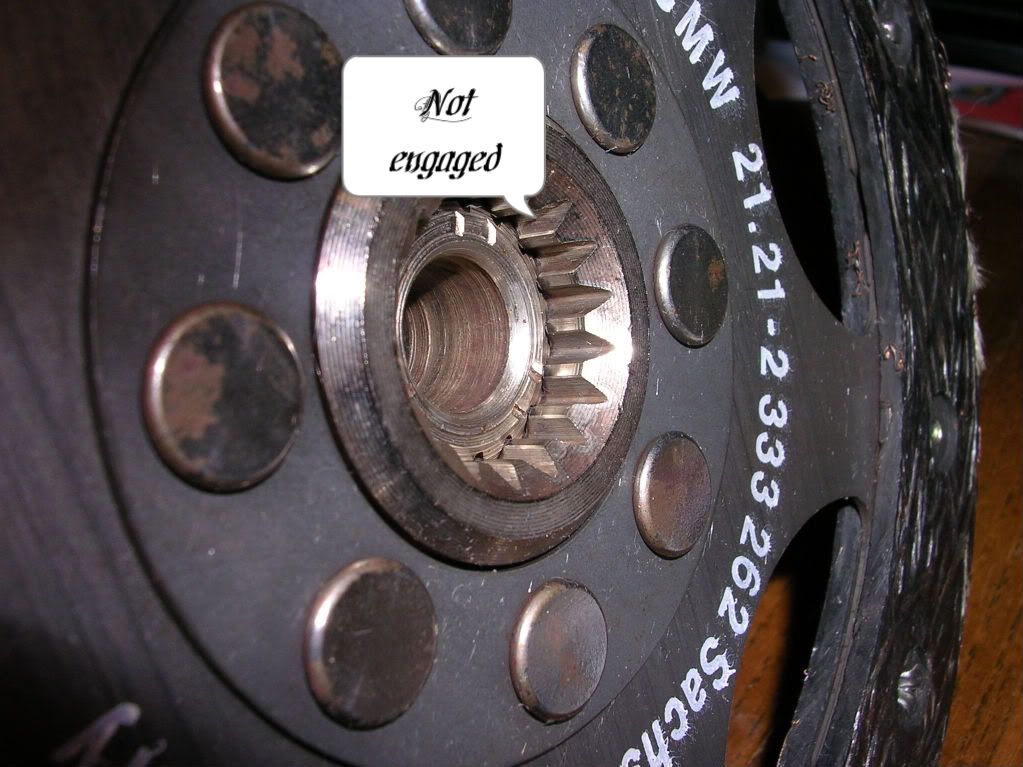
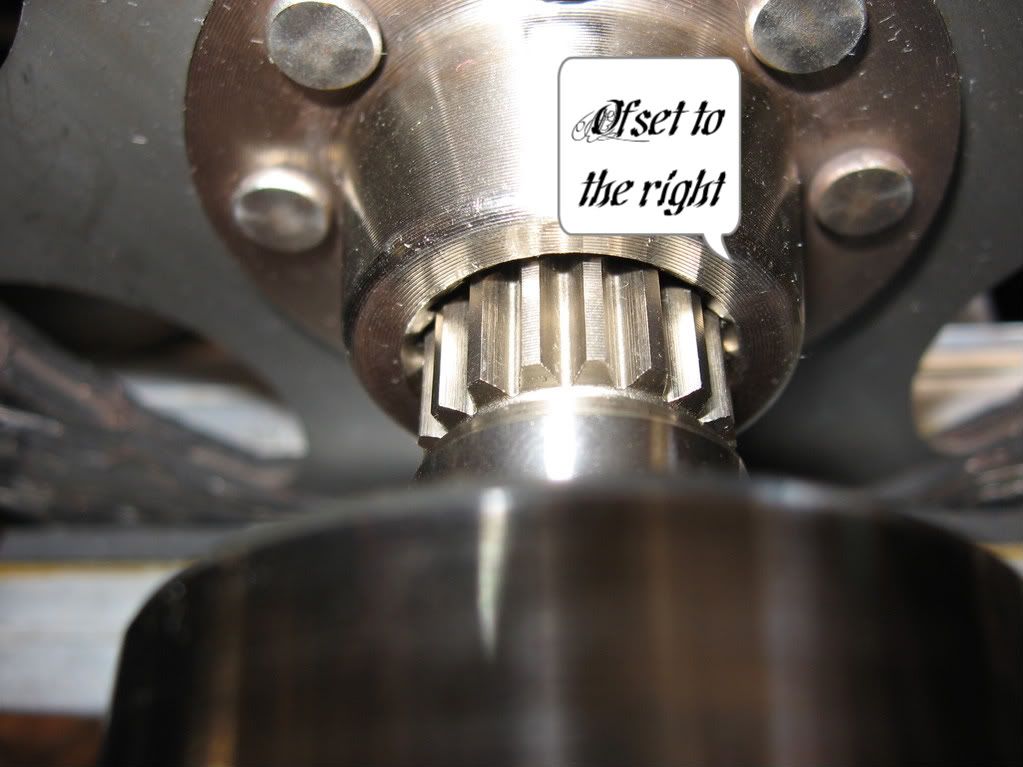
Another issue is the length of the spline engagement between the clutch disc and the input shaft, the result is the “overhang†of the clutch disc on the input shaft. I measured .583†or 14.82 mm for the “worn†input shaft spline and .720†or 18.29 mm for the length of the clutch disc spline, that computes to 80% contact between the two. Do remember that as you decrease the contact area, the force over unit area increases by the same amount. See pictures below:
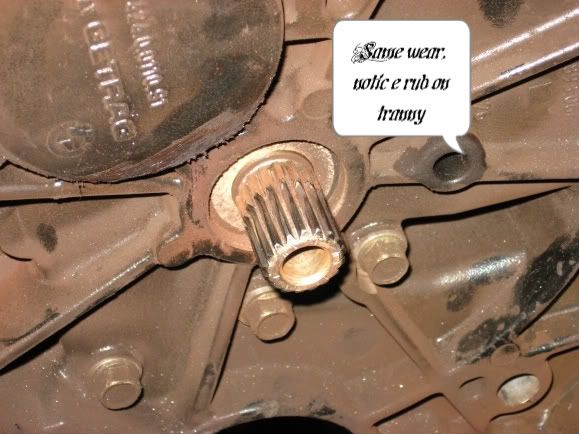
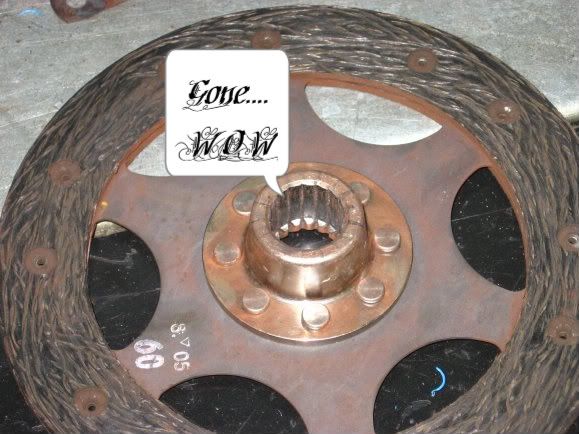
Tor1150r parts – Failures at 39.9K and 66.7K
The pics below show one of the potentially dangerous failures as once the disc splines are lost the bike will loose forward momentum. See pics below
Other Data
BMWsporttouring - This site relates the trials and tribulations of an owner that endured 7 failures on a 98 R1100R. The highlighted link RickPon his post takes you to another user that experienced the failure along with pictures on a 04 RT with 12K – 13K miles
http://bmwsporttouring.com/ubbthreads/s ... Post596643
Pelican BMW forum - Relates a double failure in Australia of a 03 R1100S, the first at 13K kms and the second at 17K kms.
http://forums.pelicanparts.com/showthread.php?t=381041
Pelican BMW forum - Relates a failure in the UK as early as 2000, the owner was lucky as he received a free tranny.
http://forums.pelicanparts.com/showthre ... adid=24006
On December 24, 2005 on the R1150R forum, Boxer started a thread to which all of the pundits contributed; it will be worthwhile for you to visit as the causes were pretty much out on the open.
Likewise on September 12, 2007, on the R1150R forum I started a thread collecting info on those that had failures and the following was reported then:
EVmachina, 04 Roadster, failure at 17K miles
Tor1150r, 04’ R1150R, 2 failures, 39.9K and 66.7 K miles
Marty Wadd, 35K miles
Paul Mihalka 02 R1150R, failure at 29 K miles
Most of the gearboxes are Getrag, but some have no visible ID.
Google “BMW Motorcycle clutch failures†and you will be exposed to a vast array of sites and experiences.
Mention has been made of the guide pins or lack thereof between the gearbox mounting flange and the engine flange as a potential source for the failure. As I understand there are two pins that establish the centerline between the crankshaft and the transmission input shaft, so as to prevent lateral misalignment. Being that I never had the need to drop the tranny, I could not attest to the quantity and location.
Conclusions
It is my opinion that there are many contributory elements to this failure and I will try to dissect each one of them. However the type wear exhibited on both the input shaft and clutch disc splines is characteristic of angular misalignment between the gearbox and the engine (this could also be experienced at any of the bolt up vertical surfaces, i.e. the crank flange, flywheel flange, flywheel surface or square ness with the crank centerline and the same on the tranny side.
This failure is not maintenance or operator induced, it is merely a machining/alignment error that the OEM has not seen fit to accept responsibility for.
In addition to the above there are other contributing factors that will eventually affect the longevity of the input shaft/clutch disc, as some of the early models are coming up on some serious miles by now.
Transmission input shaft – The design allows having the throw out bearing as an integral part of the clutch/flywheel, unfortunately to accomplish this the tranny input shaft doesn’t pilot onto the crankshaft as it is the norm in all automotive applications to insure that the centerline of the two is not compromised. Design issue.
Clutch disc - The clutch disc splines do not engage fully with the input shaft counterparts, this increases the transferred load. In addition the disc portion that overhangs the input shaft allows the “rocking†of the disc as the clutch begins to engage. The disc should have full engagement to the input shaft splines. Design issue.
Overall the basic engine design remains, the improvements have been evolutionary and within the confines of the original engine/tranny case, this limits any type of improvement onto the size or design of the clutch or its components, meanwhile the displacement and output increased over the years. Basically the OEM has been living of the safety factor built onto the original design. Design issue
Last but not least, this little problem will eventually come to haunt the BMW community as the bikes in question are coming of age and the spline problems, if they are to be had, will be imminent. I would want to have piece of mind if I acquire an R259 second hand, at least to the point of knowing if it has had the spline failure.
Anyone is welcome to the parts for their evaluation…..I volunteer to work with the next unfortunate user that befalls upon this problem and will compile a list of things to look for and measurements to take to get down to the point source for the problem.
The topic is essentially a root cause failure analysis and I’ll try to be careful with the explanation and language so as not to confuse the readers. So off we go:
Background
The BMWR259 models (4 valve heads) are no strangers to clutch failures as they have been documented on the various forums representing the brand time and time again. The failures are not model specific as they affect the R, RS, RT and GS, albeit I haven’t found many GS’s the have been affected.
On the R1150R forum the topic has come up several times dating back to December 24th, 2005 describing specific instances and September 12, 2007 among others, documenting specific failures across model lines.
One of the most interesting aspects, to date, is that the quantity of failures is significant enough and potentially dangerous to have warranted acknowledgement and action by the OEM but this has yet to happen. Some owners have been lucky and their repairs were warranted, some others had to endure partial or full cost for the repair along with the lay-up time.
Data
I was provided with actual samples of failed parts kindly donated by RiftonRoadster, along with pictures from tor1150r parts, for inspection, evaluation and measurement.
Rifton parts – 02 R1150R @ 43K miles
Input shaft had no visible/measurable wear other than the splines, the bearing was tight and free. Clutch disc measured 0.248’ (thickness) between the friction faces, as new thickness is ~0.350’ or ~ 9 mm, complete wear, to the rivets, is 0.175’ or 4.5 mm. Based on these measurements and the specific operating habits of the owner. I would have predicted a clutch life of 60K miles with a safety factor of 0.5 mm before rivet to flywheel contact.
The input shaft displays significant spline wear starting at the transmission end and tapering off towards the front of the input shaft. This wear, in the vernacular, is the pre-cursor to the failure. The wear is uniform around the OD of the input shaft indicating the presence of angular misalignment between these two elements. Normal lubrication can’t cope with this phenomena and is therefore “squeezed†out by the heavy contact and accelerating the failure.
Another issue is the length of the spline engagement between the clutch disc and the input shaft, the result is the “overhang†of the clutch disc on the input shaft. I measured .583†or 14.82 mm for the “worn†input shaft spline and .720†or 18.29 mm for the length of the clutch disc spline, that computes to 80% contact between the two. Do remember that as you decrease the contact area, the force over unit area increases by the same amount. See pictures below:
Tor1150r parts – Failures at 39.9K and 66.7K
The pics below show one of the potentially dangerous failures as once the disc splines are lost the bike will loose forward momentum. See pics below
Other Data
BMWsporttouring - This site relates the trials and tribulations of an owner that endured 7 failures on a 98 R1100R. The highlighted link RickPon his post takes you to another user that experienced the failure along with pictures on a 04 RT with 12K – 13K miles
http://bmwsporttouring.com/ubbthreads/s ... Post596643
Pelican BMW forum - Relates a double failure in Australia of a 03 R1100S, the first at 13K kms and the second at 17K kms.
http://forums.pelicanparts.com/showthread.php?t=381041
Pelican BMW forum - Relates a failure in the UK as early as 2000, the owner was lucky as he received a free tranny.
http://forums.pelicanparts.com/showthre ... adid=24006
On December 24, 2005 on the R1150R forum, Boxer started a thread to which all of the pundits contributed; it will be worthwhile for you to visit as the causes were pretty much out on the open.
Likewise on September 12, 2007, on the R1150R forum I started a thread collecting info on those that had failures and the following was reported then:
EVmachina, 04 Roadster, failure at 17K miles
Tor1150r, 04’ R1150R, 2 failures, 39.9K and 66.7 K miles
Marty Wadd, 35K miles
Paul Mihalka 02 R1150R, failure at 29 K miles
Most of the gearboxes are Getrag, but some have no visible ID.
Google “BMW Motorcycle clutch failures†and you will be exposed to a vast array of sites and experiences.
Mention has been made of the guide pins or lack thereof between the gearbox mounting flange and the engine flange as a potential source for the failure. As I understand there are two pins that establish the centerline between the crankshaft and the transmission input shaft, so as to prevent lateral misalignment. Being that I never had the need to drop the tranny, I could not attest to the quantity and location.
Conclusions
It is my opinion that there are many contributory elements to this failure and I will try to dissect each one of them. However the type wear exhibited on both the input shaft and clutch disc splines is characteristic of angular misalignment between the gearbox and the engine (this could also be experienced at any of the bolt up vertical surfaces, i.e. the crank flange, flywheel flange, flywheel surface or square ness with the crank centerline and the same on the tranny side.
This failure is not maintenance or operator induced, it is merely a machining/alignment error that the OEM has not seen fit to accept responsibility for.
In addition to the above there are other contributing factors that will eventually affect the longevity of the input shaft/clutch disc, as some of the early models are coming up on some serious miles by now.
Transmission input shaft – The design allows having the throw out bearing as an integral part of the clutch/flywheel, unfortunately to accomplish this the tranny input shaft doesn’t pilot onto the crankshaft as it is the norm in all automotive applications to insure that the centerline of the two is not compromised. Design issue.
Clutch disc - The clutch disc splines do not engage fully with the input shaft counterparts, this increases the transferred load. In addition the disc portion that overhangs the input shaft allows the “rocking†of the disc as the clutch begins to engage. The disc should have full engagement to the input shaft splines. Design issue.
Overall the basic engine design remains, the improvements have been evolutionary and within the confines of the original engine/tranny case, this limits any type of improvement onto the size or design of the clutch or its components, meanwhile the displacement and output increased over the years. Basically the OEM has been living of the safety factor built onto the original design. Design issue
Last but not least, this little problem will eventually come to haunt the BMW community as the bikes in question are coming of age and the spline problems, if they are to be had, will be imminent. I would want to have piece of mind if I acquire an R259 second hand, at least to the point of knowing if it has had the spline failure.
Anyone is welcome to the parts for their evaluation…..I volunteer to work with the next unfortunate user that befalls upon this problem and will compile a list of things to look for and measurements to take to get down to the point source for the problem.


